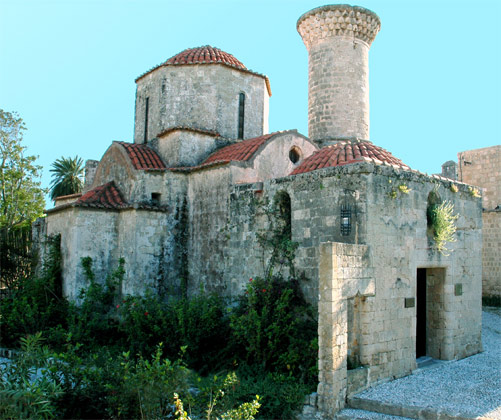
ΈΡΓΑ

| Η ΘΑΛΑΣΣΙΝΗ ΠΥΛΗ ΤΟΥ ΜΕΓΑΛΟΥ ΜΑΓΙΣΤΡΟΥ AUBUSSON
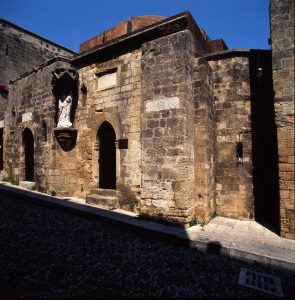
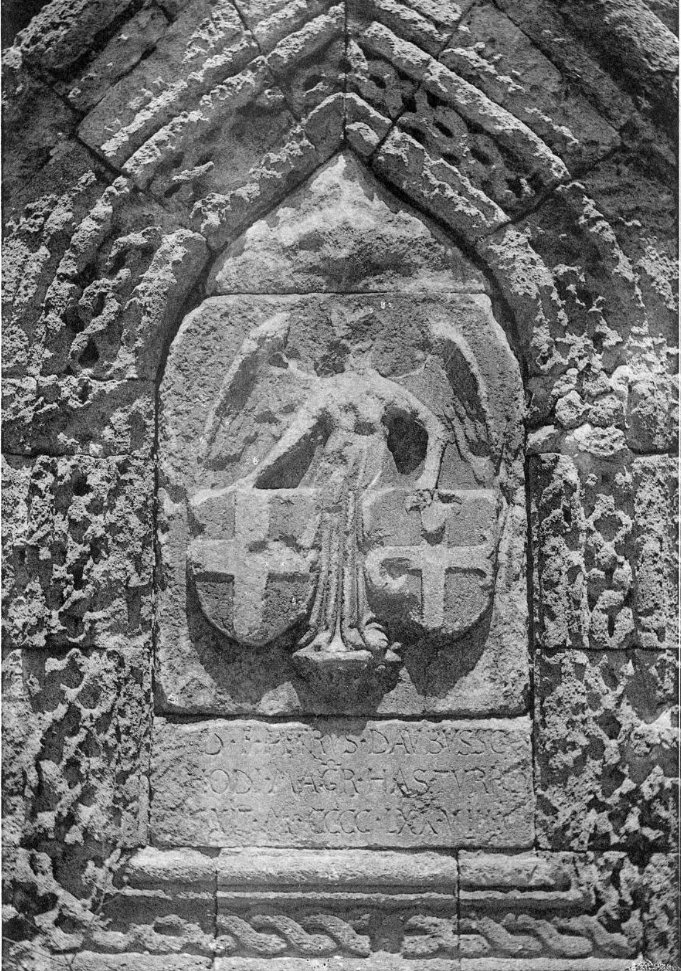
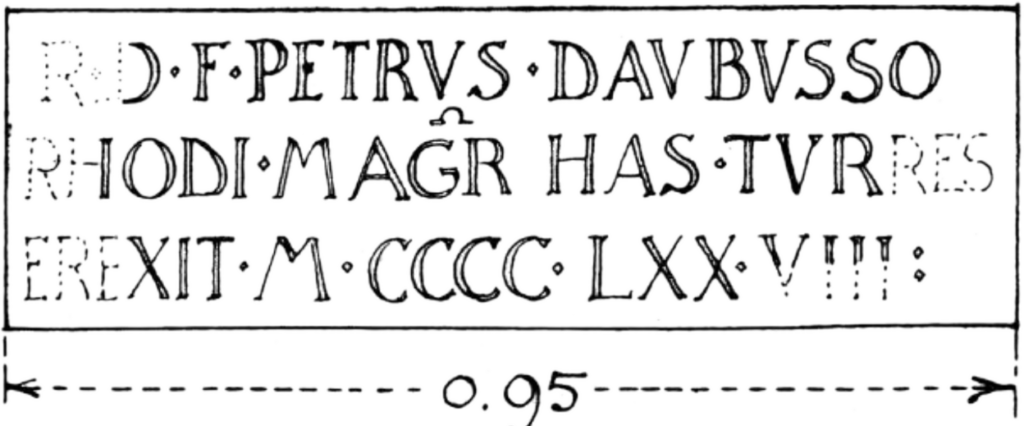
Η Θαλασσινή Πύλη οικοδομήθηκε από τον μεγάλο μάγιστρο Pierre d’Aubusson το 1478, στο πλαίσιο ευρύτερου προγράμματος αποκατάστασης και ανακαίνισης του επιθαλάσσιου τείχους της πόλης, που είχε αρχίσει την εποχή του προκατόχου του Giovan-Battista degli Orsini με την επισκευή του τείχους στα ανατολικά της πύλης. Για τη χρηματοδότηση των εργασιών ο Aubusson επιστράτευσε δύο Ιωαννίτες, τον Aimery d’Amboise, τότε θησαυροφύλακα του Τάγματος, και τον ίδιο του τον ανεψιό, τον Guy de Blanchefort, για να ζητήσουν οικονομική ενίσχυση από τον βασιλιά Λουδοβίκο ΙΑ’ της Γαλλίας (1461-83). Ο ηγεμόνας αυτός, περιβόητος για τη φιλαργυρία αλλά και την πανουργία του, είχε ισχυρό πολιτικό κίνητρο για να ανταποκριθεί θετικά στις παρακλήσεις των Ιωαννιτών: την εποχή εκείνη διεκδικούσε το δουκάτο της Βουργουνδίας, που ως τότε είχε σταθεί στο πλευρό του Τάγματος, και δεν ήθελε να φανεί πως το Γαλλικό στέμμα ενδιαφερόταν λιγότερο για την προστασία της Χριστιανοσύνης. Έτσι προέτρεψε τον πάπα Σίξτο Δ’ να κηρύξει ιωβηλαίο (προσκυνηματικό έτος) στη Γαλλία για την άμυνα της Ρόδου, το οποίο απέφερε στους Ιωαννίτες γερή οικονομική ενίσχυση. Εκτός από την οικοδόμηση της Θαλασσινής Πύλης, φαίνεται ότι ο Aubusson με τα χρήματα αυτά, επισκεύασε το βορειοδυτικό τμήμα του επιθαλάσσιου τείχους αλλά και τον πύργο του μώλου των Μύλων. Ως αναγνώριση για την παρέμβαση του βασιλιά, το έμβλημα της Γαλλίας τοποθετήθηκε πάνω από τη Θαλασσινή Πύλη και στον Πύργο των Μύλων. Το έμβλημα του πάπα Σίξτου ΙΔ’ τοποθετήθηκε στον ανακαινισμένο Πύργο του Αποστόλου Παύλου, στη βόρεια απόληξη του επιθαλάσσιου τείχους. Το μέτωπο της Θαλασσινής Πύλης κοσμεί εντυπωσιακή ανάγλυφη σύνθεση με τρεις μορφές κάτω από γοτθικό κουβούκλιο. Στο κέντρο στέκει η Παναγία, επίσημη προστάτιδα του βασιλείου της Γαλλίας, με τον προστάτη του Τάγματος άγιο Ιωάννη τον Πρόδρομο στην τιμητική θέση στα δεξιά της (αριστερά για τον θεατή) και στα αριστερά της τον άγιο Πέτρο, του οποίου το όνομα έφερε ο μεγάλος μάγιστρος. Κάτω από τα πόδια των μορφών είναι τοποθετημένα τα αντίστοιχα εμβλήματα, της Γαλλίας στο κέντρο, του Τάγματος και του Aubusson, που συνοδεύονται από αφιερωματική επιγραφή. Δυστυχώς τόσο τα εμβλήματα όσο και η επιγραφή έχουν υποστεί σοβαρή φθορά από τα στοιχεία της φύσης: Είναι όμως δυνατή η ανασύνθεση της επιγραφής ως εξής: R D F PETRVS D AUBUSSO[N] RHODI MAGISTER HAS TURRES EREXIT MCCCCLXXVIII, δηλ. Ο σεβαστός αυθέντης αδελφός Pierre d‘Aubusson, μάγιστρος της Ρόδου, ανέγειρε αυτούς τους πύργους, 1478. Το εραλδικό ανάγλυφο που κοσμεί τη δυτική όψη της πύλης, σήμερα κρυμμένο από την καμάρα περιόδου Τουρκοκρατίας που επεκτείνει το πέρασμα προς το εσωτερικό της πόλης, περιβάλλεται από οξυκόρυφο πλαίσιο με πλοχμό. Φέρει άγγελο που στα χέρια του κρατάει θυρεούς του Τάγματος και του μεγάλου μαγίστρου. Η εγχάρακτη επιγραφή στο κάτω μέρος διατηρείται καλύτερα από την επιγραφή προς τη μεριά της θάλασσας: |
 |
|
THE MARINE GATE OF GRAND MASTER PIERRE D’AUBUSSON The Marine Gate was built by grand master Pierre d’Aubusson in 1478, within a broader programme of restoration and renovation of the sea wall, begun under his predecessor Giovan-Battista Orsini with the restoration of the curtain wall east of the Gate. To fund the work, Aubusson charged two Knights Hospitaller, treasurer Aimery d’Amboise and Guy de Blanchefort, his own nephew, to petition king Louis XI of France (1461-83) for financial assistance. The king, well-known for his avarice and guile, nevertheless had powerful political motives to oblige Aubusson: at the time he was laying claim to the duchy of Burgundy, which had been a staunch supporter of the Knights, and did not wish to give the impression that the French crown was less interested in the cause of Christendom in the East. Thus, he prompted pope Sixtus IV to announce a jubilee in France for the defence of Rhodes, which earned the Hospitallers substantial amounts of cash. With this money, apart from the Marine Gate, Aubusson restored the northwest part of the sea walls and the tower protecting the Mole of the Windmills. In recognition of the King’s assistance, the arms of France were set above the Marine Gate and on the Tower of the Windmills. The arms of pope Sixtus IV were mounted on the renovated Tower of St Paul, at the northwest end of the sea wall. The frontage of the Marine Gate is decorated with an impressive marble relief composed of three standing figures under a gothic canopy. The Virgin Mary, patroness of the kingdom of France stands at the centre, with saint John the Baptist, patron of the Order on her right (left for the viewer) and saint Peter, patron and namesake of the grand master, to her left. Below the three figures are set the arms of France, of the Order of the Hospital and of Aubusson, accompanied by a commemorative inscription. Unfortunately, the heraldry and the inscription are now badly eroded and only partially legible: It is, however, possible to restore the inscription as follows: R D F PETRVS DAUBUSSO[N] RHODI MAGISTER HAS TURRES EREXIT MCCCCLXXVIII, i.e. Reverend lord brother Peter of Aubusson, master of Rhodes, built these towers, 1478. The heraldic relief decorating the west front of the gate, now concealed from view by the Ottoman vault extending the passage towards the interior of the town, is set within a pointed arch with a moulded frame. It bears an angel holding the arms of the Order of the Hospital and of grand master Aubusson. The incised inscription below is in a much better state of preservation than the corresponding one on the seaward front, and reads: |
 |
 |
|